You've built your foundation, and now you're ready for the next step...
Whether it's your first time, or you're ready to try a more methodical approach... Let's Start Your Dog On Sheep!
You know you want to do this - it's been a dream of yours, but you worry that you'll ruin your dog.
WOULD IT MAKE YOU FEEL BETTER IF I SAID YOU'RE NOT ALONE?
Teaching your dog to herd is probably unlike anything else you've ever done. If you've already tried, you know that everything happens so fast.
Is this course right for you?
- You've got a keen young dog, but aren't sure where to begin
- You want to learn why top handlers focus on particular foundation skills
- You want to avoid common mistakes and setbacks
- You’re looking for a positive, progressive way to start stock work
- You’d like to see real dogs working through real scenarios, not just theory
Most herding courses skip a lot of steps, and try to make training look like magic.
I see no benefit to that. It sets you up to feel like a failure, when you and your dog make mistakes - and of course you will - we all do!
When I built this course, I built something I wish had been around when I started out. I took green dogs, and recorded their training sessions.
I make sure to point out when I'm out of position and how it effects the dog's work - I'm sure it's no surprise to you that their errors are often related to our timing and body language. Watching real dogs being trained in real time -with unedited videos (I don't edit out imperfection) will help you improve your own timing.
I train multiple dogs because every dog is different, and I want you to see how to handle those differences.
I'm still adding dogs - because it doesn't matter how long you've been in dogs, new learning opportunities always show up.

Of course I'll show you how to start a dog...but I'll also show you:
How to...
→ set up for success, with tips on how to build a training pen, and how to select appropriate training sheep, because your training area and and sheep do make a difference!
How to...
→ use pressure and release to shape behaviour.
How to ...
→ handle problems. It's often a matter of a subtle tweak.
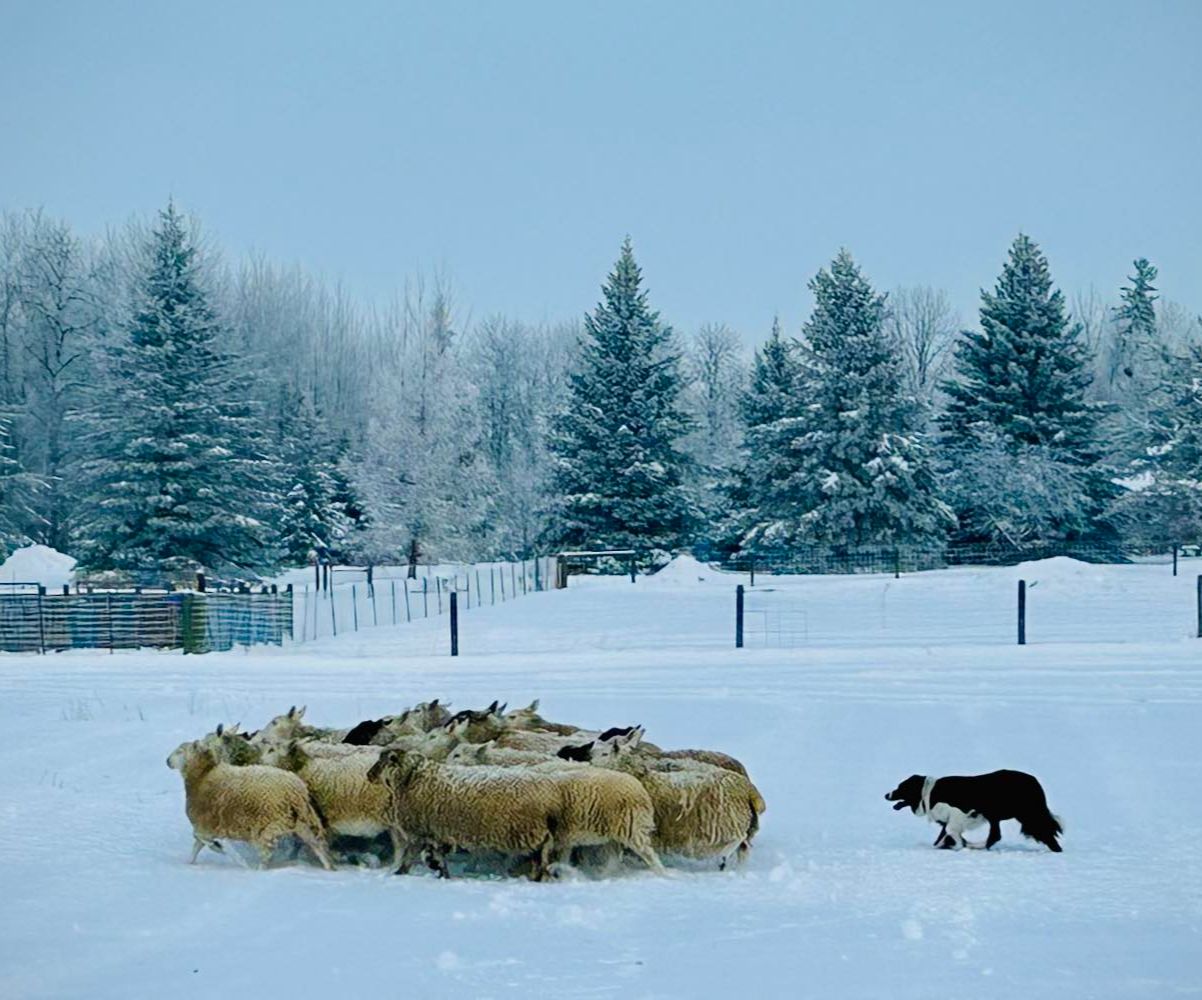

And I'll also show you progressive training methods.
Because I believe in training smarter, not harder.
